Home / Workshop / Kit · Commute
Kit · Commute · · 8 min readPanniers for commuting: choosing and setting them up
A good pannier beats any rucksack on a daily ride. A bad pannier eats your heel. Here is how to tell them apart.
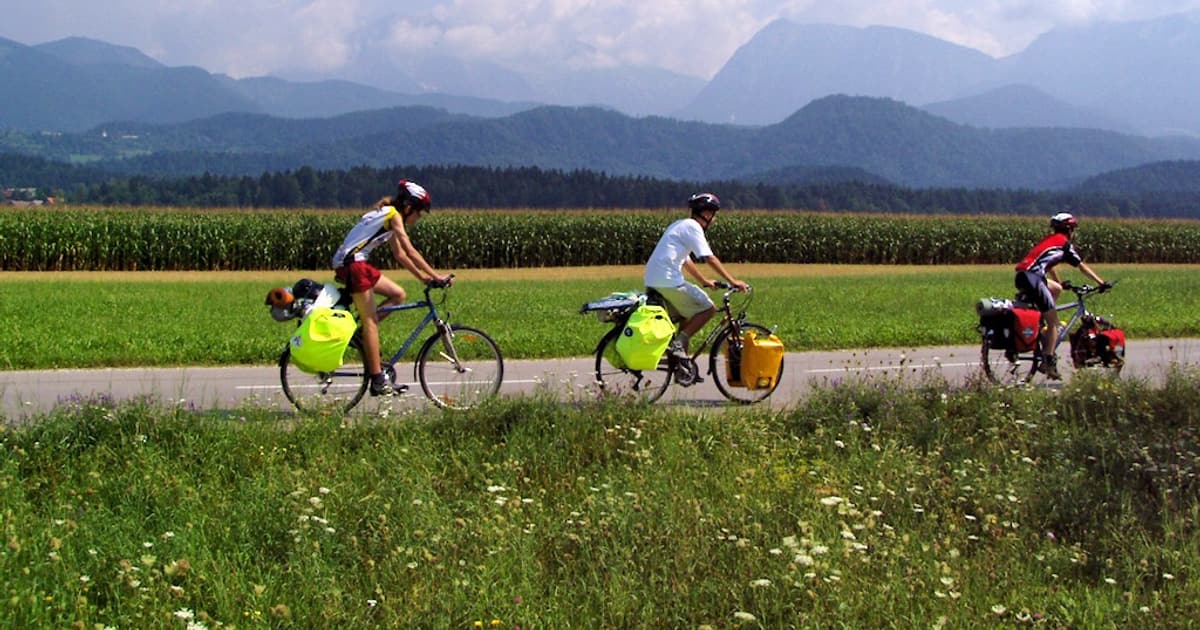
Photo: Marek Ślusarczyk (Tupungato), CC BY 3.0, via Wikimedia Commons.

A single pannier does more for a bike commute than almost any other upgrade. A sweaty back goes dry. A laptop rides quietly on the frame rather than banging between your shoulder blades. You remove the bag at the office, carry it in like a briefcase, and the bike looks like a bike again.
That is the sell. Now the practice.
Does your bike take a rack?
The short version: if there are threaded eyelets near the rear dropouts and under the seatstay bridge, yes. Most hybrid, touring, commuter and older mountain bikes have them. Many modern road bikes do not , you can fit a seatpost-mounted rack, but it will take less weight (usually about 10 kg) and bounces more.
Carbon frames with no rack mounts are a pain for commuting with any real load. If you are buying specifically to commute, a steel or aluminium frame with mounts will serve you ten years longer than a race bike adapted with clips and clamps.
Rack first, pannier second
Buy the rack before the bag. A cheap rack with a flexy top deck will click and squeak under any bag; a stiff rack with proper triangulated struts holds twenty kilos of groceries quietly. Look for:
- Tubular aluminium or steel with braced legs.
- A rated load that comfortably exceeds what you carry.
- A strong top rail for bungee cords , not a flat plastic sheet that bends.
- Enough length between the pannier and the chainstay for your heel to clear.
If you ride a smaller frame , many people with inside-leg under 76 cm do , "heel strike" into the front corner of a pannier is the single most common complaint. Look for racks that set the pannier further back, or use short-body panniers.
Pannier types
Roll-top waterproof
One large tube, no divisions, a stiff back panel and a roll closure. These are the standard British commuting pannier for good reason. They stay dry even in a long downpour, pack huge, and clean out easily. They are not clever: they do not organise your things. A couple of small stuff-sacks inside will fix that.
Zipped flat panniers
Easier to live out of. The zip is a waterproofing weakness; a storm flap over it helps, but in sustained rain all zipped bags take water eventually. If your commute is short and you carry a laptop in a sleeve, this is fine.
Office-style panniers
A pannier that looks like a briefcase or messenger bag, with an attachment system on the back. Useful if you walk a long way at either end. The compromise is weight and waterproofing; add a rain cover.
Mounting systems
Most rear panniers hook over the top rail of the rack and have a lower clip or hook that catches the frame of the rack. The good systems let you mount and release the bag with one hand and hold firmly on a cobbled street. Key things to check:
- Hooks fit your rack's tubing diameter. Many panniers include spacer inserts for thinner rails.
- The lower hook pulls tight when weight is on; no rattle when empty.
- The carry handle is positioned so the bag hangs upright off the bike.
What to pack and where
Keep the pannier roughly square: heavy things low and against the rack, soft things on top. A laptop goes in a padded sleeve, standing on its spine against the back of the bag, not lying flat. Lunch and gym kit on top. A separate small pouch holds the puncture repair bits, so you are not emptying the bag onto the pavement.
Waterproofing , the honest version
There is no such thing as a truly waterproof bike bag for a British winter. Roll-tops with welded seams come closest. For papers, electronics and spare clothes, use a resealable plastic bag inside the pannier. Belt and braces; weigh nothing.
Reflective strips and lights
Most panniers come with a small reflective patch and a loop to clip a rear light to. Use both. In side-on view at dusk a lit pannier is the most visible thing on your bike. See our piece on UK bike lights for what to run with it.
Front panniers, saddlebags and rucksacks
Front panniers on low-rider racks are a touring thing, not a commuting one. A small saddlebag , the kind that hangs under the saddle , is useful for the tools and inner tube and nothing else. A rucksack is fine up to about five litres; beyond that it is a sweat problem.
Looking after a pannier
Rinse mud off the hooks every few weeks; grit chews the plastic. Wipe the inside out if you ever carry damp clothes home. If a hook snaps , and they eventually do on heavy-use bags , most big-brand manufacturers sell replacement hardware for a few pounds. Panniers often outlast the bike.
A quick word on the rear reflector
A high-sided pannier can hide the rear reflector on your bike's seatpost. Fit a second reflector on the pannier itself or on the rack; this matters for the Highway Code's rules for cyclists.
In short
Good rack, one honest waterproof pannier, a spare plastic bag inside for your laptop. Hooks that do not rattle. A rear light clipped on. That is the whole kit. Your back stays dry, your bike stays upright, and nothing in your bag ends up on the floor at a roundabout.
If the ride home is where you plan to work on the bike, see our brake-adjustment guide: a loaded bike needs honest brakes. And if your bike goes missing while you are inside, our note on registering a bike against theft is a sensible half-hour.
The best pannier is the one still on your bike in five years.
About these pieces. Cranky Bikes is written by the editors and is not affiliated with any other site of a similar name. We do not sell bikes. We do not accept payment for links or coverage. If you spot something wrong, write to [email protected].