Home / Workshop / Workshop · Drivetrain
Workshop · Drivetrain · · 7 min readWhen is a bicycle chain actually worn out?
Chains do not snap. They stretch. A chain changed on time is twenty pounds; one changed late is a hundred and twenty.
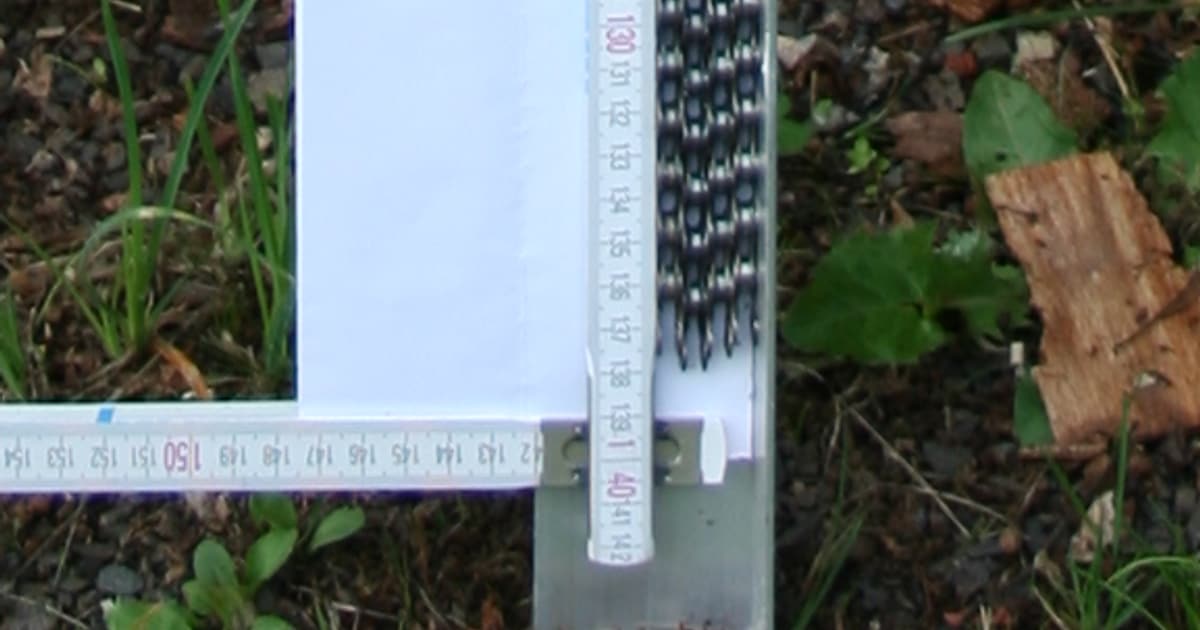
Photo: UuMUfQ, CC BY-SA 3.0, via Wikimedia Commons.

A bicycle chain has nothing to stretch. The metal does not creep. What wears is the little pins and the holes in the inner plates they turn on. Every pedal stroke rubs them a fraction. After a few thousand kilometres the chain is physically longer than it was. We call that "stretch" because it is a shorter word than the truth.
It matters because a worn chain sits badly on the sprockets. It carves hollow, hooked teeth into them. Replace the chain on time and the sprockets last several chains. Leave it, and you need the lot.
The ruler test , the one that does not lie
Any steel ruler marked in inches will do. The chain is built so that twelve full links measure exactly 12 inches when new. Each full link is one inch, pin to pin. (A "full link" is one inner plate plus one outer plate; some people call the inner and outer each a link, so 24 "links" per 12 inches. Either way the pins are an inch apart.)
Shift onto the big chainring, slacken the chain slightly by backing off the rear derailleur if you can, and hold the ruler against the flat run of chain, top side, between chainring and the rear block. Line the ruler's zero on a pin centre. Count twelve pins. Look at the reading on the twelfth pin.
If the twelfth pin lands past 12 1/16", start thinking about a new chain.
Reading the ruler
- Lands on 12" exactly. New or nearly new. Keep riding.
- 12 1/16" (0.5% elongation). Replace the chain. The sprockets are almost certainly still fine.
- 12 1/8" (1%). Chain is well past it. The small sprockets, especially the 15 and 17 tooth cogs you use most, will probably need replacing too.
- 12 3/16" or more. Expect to replace chain, cassette and possibly the chainring that gets the most use.
Do you need a chain checker tool?
You do not. The little drop-in gauges are convenient and give a go/no-go reading at 0.5 and 0.75 or 1 percent. They are also slightly optimistic because they measure pin-to-pin distance including roller play, which skews the number upward. A ruler is free, accurate, and the method Sheldon Brown described decades ago. If you want a gauge, fine; just do not pay a lot for one.
What actually wears, and why
The pins rotate inside the inner plate bushings every time a link enters and leaves a sprocket. Grit speeds this up; a dry chain speeds it up further. Mud flung off the roads of the South Downs in February is finely abrasive. An oiled chain carries fine grit through the bushings like lapping paste.
This is why cleaning matters more than the brand of lube. Wiping the chain with a clean rag at the end of every grubby ride does more than any wax. Re-lube only when the chain has had the previous oil wiped off and looks dry.
Changing the chain without changing anything else
If you have caught it at 0.5%, a new chain will run smoothly on the old cassette after a few miles of settling in. Cheap 8-, 9-, and 10-speed chains with pressed pins are fine for everyday riding. Use the manufacturer's quick link of the correct speed count. Count the links on the old chain and match it; or run the new chain around the big ring and big sprocket, then add two links.
What if you have missed the window
You will know on the first ride under load: a new chain on worn sprockets skips, usually on the smallest two cogs under a hard pedal stroke. Replace the cassette. If the chainring teeth are visibly hooked (the ramp on the back of each tooth has gone from gently sloped to almost vertical, and the teeth themselves look thinner than their neighbours on the smaller ring), replace that chainring too. Do all three together; a half-fix is a short-term fix, and a new chain against a shark-finned cassette will skip again within a week.
A quick aside on multi-speed vs singlespeed chains
Singlespeed chains (sold as 1/8" width) and derailleur chains (3/32" or narrower) are not interchangeable. If your gears are indexed, the chain must match the sprocket pitch count on the box: 8, 9, 10, 11 or 12 speed. Fitting the wrong one will shift badly and wear faster.
Signs it is time
- Noise. A healthy drivetrain is nearly silent at cruising speed. A gritty, dry rattle is grit grinding the pins.
- Chain hanging off the big ring teeth at the three o'clock position when you back-pedal , "chain lift" , shows wear on chain, ring or both.
- Skipping on the small sprockets under load on a fresh chain. Cassette is done.
Measure twice, buy once. If you also want the brakes to match, see our V-brake adjustment guide; a worn chain and dragging brakes together are the usual reason an old commuter "feels slow".
And if, after all this, your bike is still not safe to ride on the dark way home, see our piece on UK bike lights and what the Highway Code actually says.
Twelve pins, one foot, one shilling's worth of ruler. The rest is maintenance.
About these pieces. Cranky Bikes is written by the editors and is not affiliated with any other site of a similar name. We do not sell bikes. We do not accept payment for links or coverage. If you spot something wrong, write to [email protected].